

Whilst planning my recent trip to Tirana, Albania I realised how close it is to nieghbouring country, Kosovo. I’m always excited when I can cross off more than one country in a trip, so I started researching. I only had two days in Tirana, so I wanted to make sure that I had enough time to take everything in before I dedicated a day to Kosovo. Luckily, it appeared that it would all work out well, so I found a day trip to Prizren and Pristina with GetYourGuide.

Where is Kosovo?
Kosovo is a landlocked country in the southeast of Europe. It’s bordered by Albania, North Macedonia, Montenegro and Serbia. Until 2008, Kosovo was a part of Serbia. Although independence was declared on February 17th 2008, many countries including Serbia refuse to recognise Kosovo’s independence.
Is it safe to travel to Kosovo?
When I mentioned to friends and family that I was going to visit Kosovo, most people either didn’t know where Kosovo is or were worried that it was unsafe. This is understandable, as in the UK we don’t learn anything about any of the Balkan countries at school. However, I vividly remember the news reports covering the Kosovan war from 1998 to 1999. We even had a special assembly at primary school where we were learned what refugees were and why they were having to flee their country.
As with all countries, before you travel it is always best to consult the gov.uk website. This is the best way to find out the latest advice from the FCDO. Currently, they advise against all but essential travel to parts of Kosovo. The parts that they are currently advising against travel to are all located in the north of the country, towards the Serbian border.
There is a high threat of terrorist attack globally affecting UK interests and British nationals, including from groups and individuals who view the UK and British nationals as targets. Stay aware of your surroundings at all times.
It is also recommended that you stick to the roads towards the Albania/Kosovo border. This is due to a risk of unexploded landmines and bombs from the 90s. As long as you stick to the main tourist regions and avoid from any political protests, you should be fine.
What is the religion of Kosovo?
In Kosovo, there is no official religion and religion is separated from the state. In the country’s constitution, it states that Kosovo is neutral in matters of religious beliefs. Everyone is equal, it prohibits religious discrimination and provides for freedom of religion.
According to the 2024 census, there were three main religions practiced in Kosovo:
- Islam (93.5%)
- Orthodox Christian (2.31%)
- Catholic Christian (1.75%)
How do you get to Kosovo?
From the UK, there are currently no direct flights to Pristina. However you can travel there by plane if you are prepared to take a layover. It is easy to travel to Kosovo via road from any of the neighbouring countries. Although if you are planning to travel from Serbia, you will need to ensure you have had your passport stamped as you have entered the country. You also need to be aware that people with a Kosovan stamp have been turned away by Serbian border control. If you are hiring a car in Serbia, you should check the terms of the rental company. Some won’t allow you to drive their Serbian cars in Kosovo due to ongoing conflict.
Some of the cities you can arrange day trips from include:
- Tirana, Albania
- Durëss, Albania
- Skopje, North Macedonia
- Podgorica, Montenegro
- Belgrade, Serbia
After doing some research, I decided to book a tour on GetYourGuide with Dream Tours Albania.
Dream Tours Albania day trip to Prizren and Pristina
I booked my tour via the GetYourGuide app which cost me £52.22. This had to be paid upfront, however I could cancel for free up until the day before. The cost of the tour included pick up and drop off from near my hotel in Tirana and the trip was to last at least 10 hours. The cost didn’t include any food, but there was going to be a stop off for coffee in the morning and a stop off for lunch in the afternoon.
After booking, I sent a message to Dream Tours Albania to ask how many other people would be on the tour. They advised me that I was the only one to have booked. If nobody else booked on then the tour would be cancelled. Luckily, a few days before the trip they told me that the trip would be going ahead.
The day before my trip, I received all of the information I needed via WhatsApp from the company. This included my pick up point which was just a 5 minute walk from my hotel and a reminder to bring my passport. On the morning of the trip, my tour guide, Eno sent me a message introducing himself and to reconfirm the pick up point.
Driving from Tirana to Prizren
I was picked up just before 7am from my pick up point in Tirana. We then went and picked up the 3 other guests from their hotel a few minutes away. I was nervous to spend such a long day in a car with strangers, but I needn’t have worried. The other three guests were from Turkey and the USA. Although they were all old friends, I didn’t once feel left out or out of place.
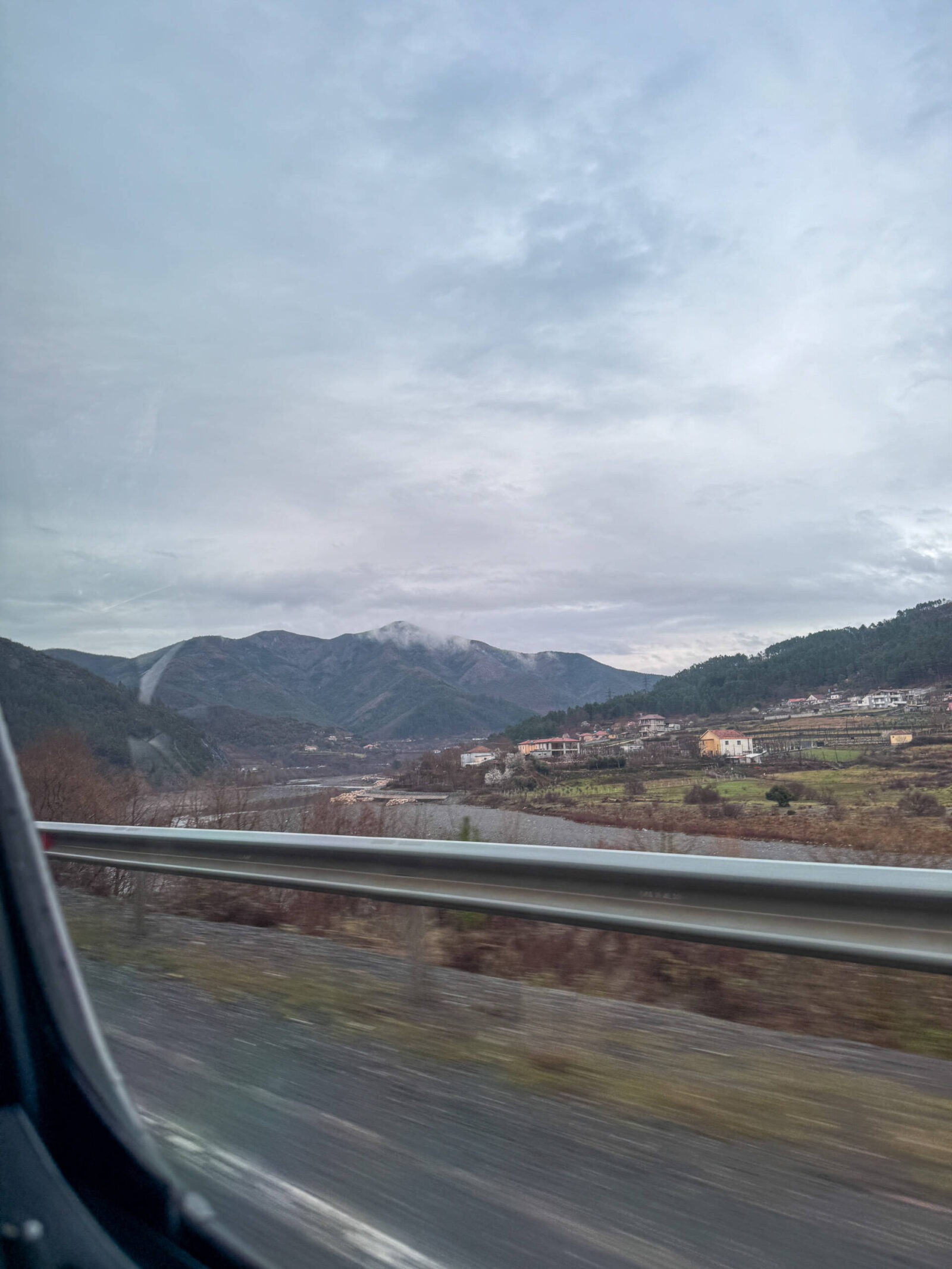
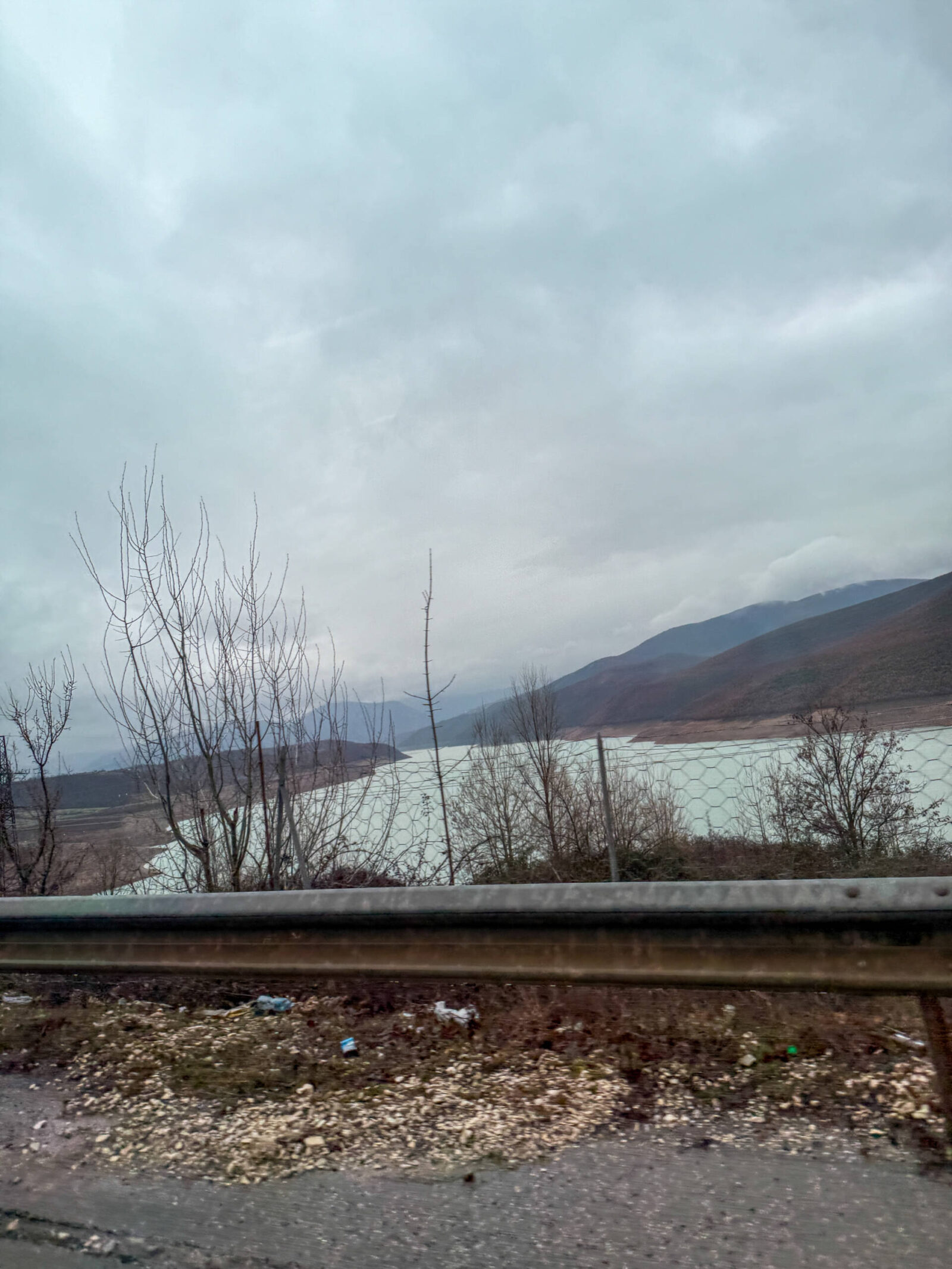
The drive from Tirana to Prizren took us through the beautiful Albanian countryside. For the whole journey, we were surrounded by mountains and lakes. Although the weather was grey and drizzly, we could still appreciate just how beautiful it was.
Crossing the border from Albania to Kosovo was stress free. It was a Sunday in March, so there weren’t any queues. If you’re going to do this trip during a busy season or a holiday then you can expect delays. There are six land border crossings between Albania and Kosovo. The crossing we used was Morine (Kukes) – Vermice (Prizren), the main border crossing between the two countries.
Eno, our driver and tour guide collected up our passports and handed them over to the guards at border control. The two Turkish passports were stamped, however mine wasn’t and neither was the US passport. There seems to be no real reason for this, but research has suggested that they may have thought I already had a lot of stamps. Or, they didn’t want there to be any issues if I was to ever visit Serbia. Overall, it took around 5 minutes to cross the border. We also had the pleasure of crossing the border with a group of cows!
Prizren
Prizren is the second most populated city in Kosovo and is known as the historic capital. Located on the foothills of the Šar Mountains in Southern Kosovo, Prizren has a population of approximately 147,000. Before I planned this trip to Kosovo, I’d never hear of Prizren and what it has to offer. A quick Google search showed that it’s renowned for its rich cultural heritage, warm hospitality and vibrant nightlife. With this just being a short trip, I didn’t have time to experience the nightlife but I was definitely able to take in the culture and experience the hospitality.
Shadërvan
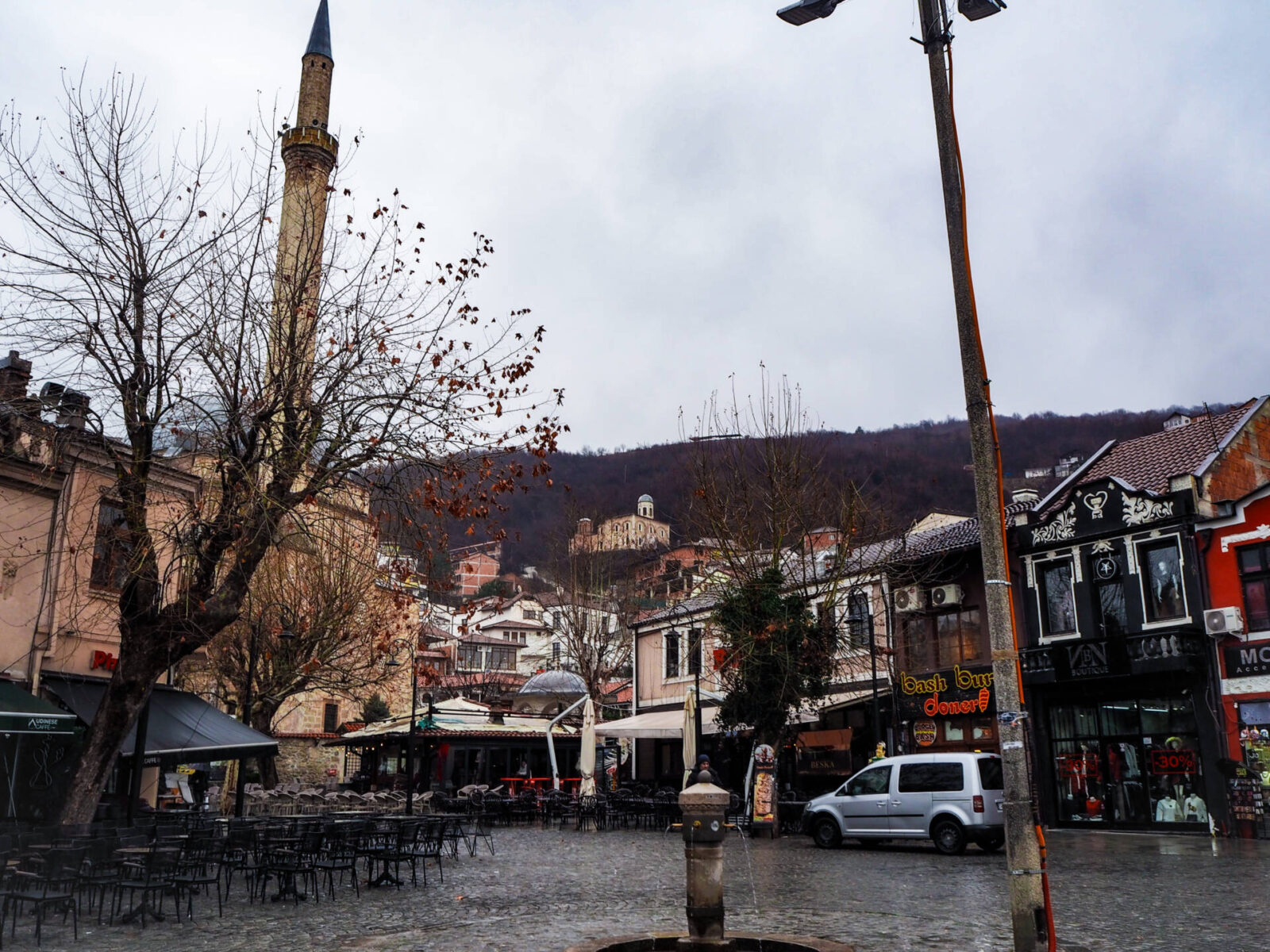
Shadërvan is the main square in the city dating back to the 16th Century. It’s known for it’s Ottoman style fountain and is surrounded by cafes, restaurants and historic buildings. This was our first stop once we arrived in Prizren. We stopped at a lounge and bar called Gatsby. Here we had chance to have a coffee and breakfast if we fancied it. As it was still quite early, I did’t fancy any food so I just had an Americano. It was a beautifully decorated venue, with the fanciest toilets I’ve ever seen!
We didn’t have a look around at any other cafes or bars, but there were a lot on this main square. It didn’t look like many were open, but as I said, it was still early on a Sunday morning. It was also the second day of Ramadan.
One thing I noticed here which I haven’t seen anywhere else is that there were a lot of stray dogs. They all looked well looked after, but they were just wandering around the square. The locals didn’t seem to be bothered by them, some stopped to fuss them and others just let them walk by. I did see a man get really angry with them and try to hit them with his umbrella which was awful. Luckily our guide intervened and the dogs trotted away.
Prizren Fortress (Kalaja e Prizrenit)
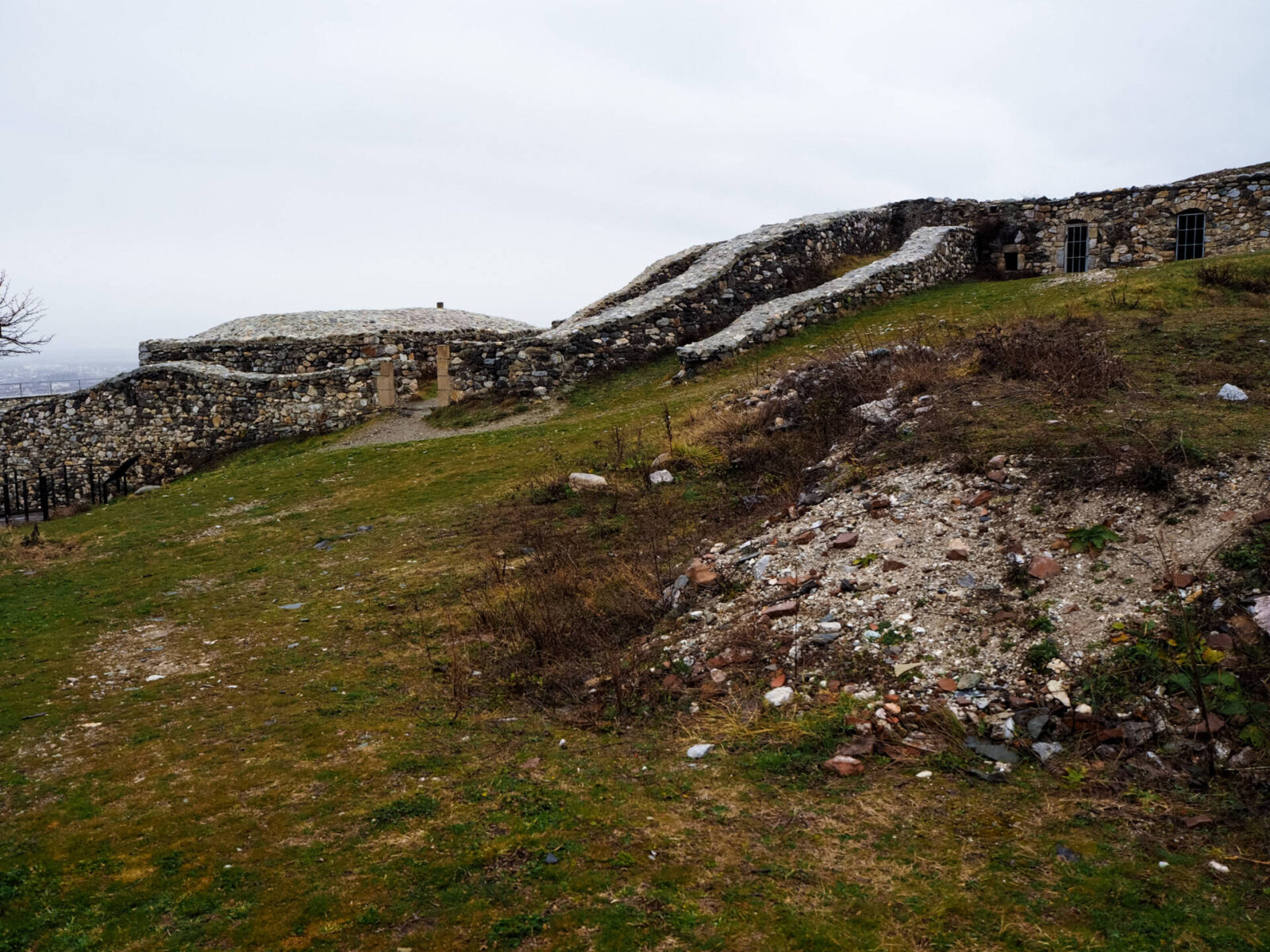
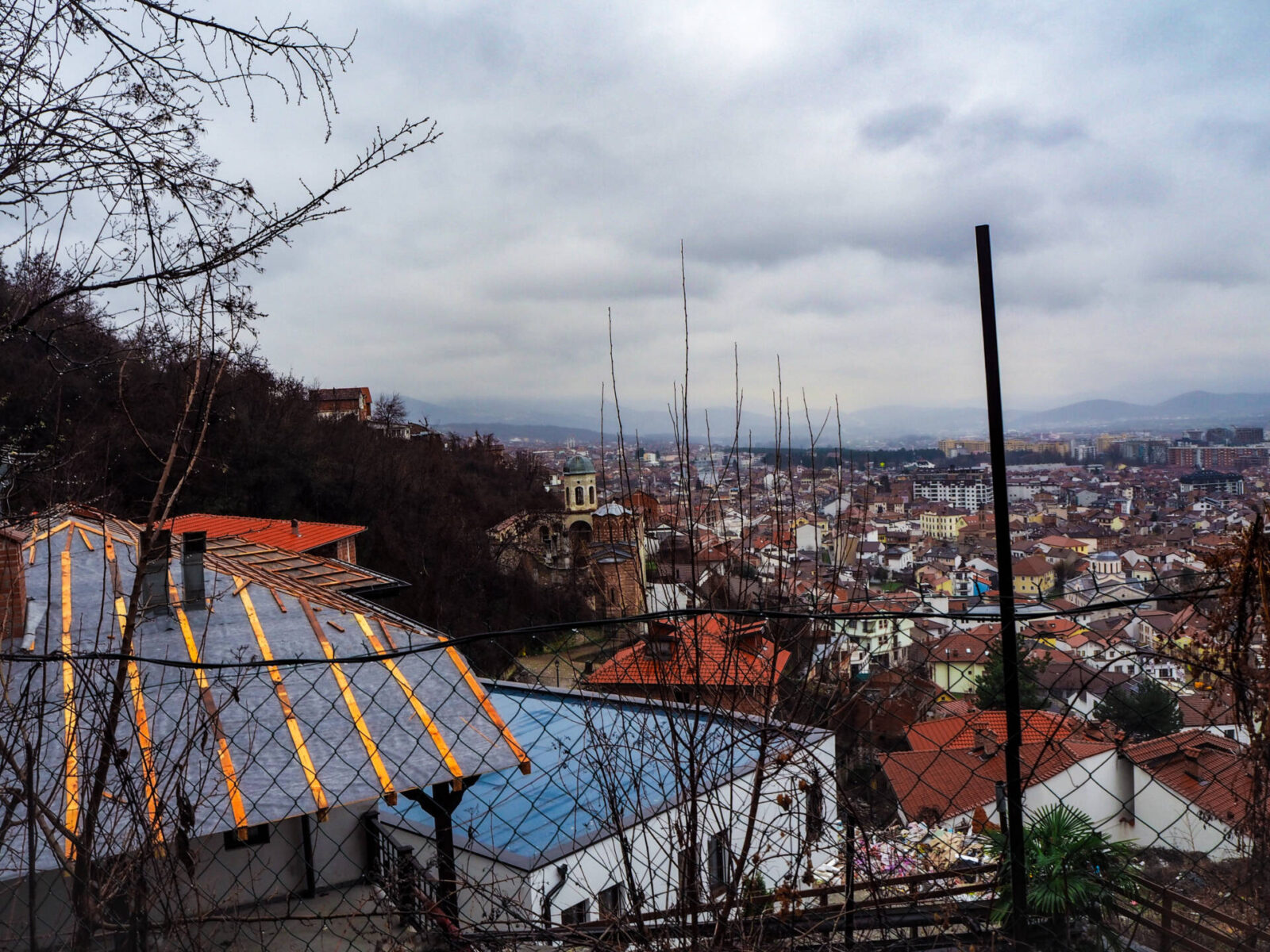
Our main activity in Prizren was visiting the fortress. Dating back to the 6th Century, Prizren Fortress sits 525m above sea level at the top of a hill overlooking the city and Prizren Bistrica (river). The walk up to the fortress is up a very steep, cobbled hill. If you have any sort of mobility issues, I wouldn’t recommend it. The day we went up, the floor was damp from the rain and quite slippy. Walking back down was even worse, there were some points where I thought I was a goner!
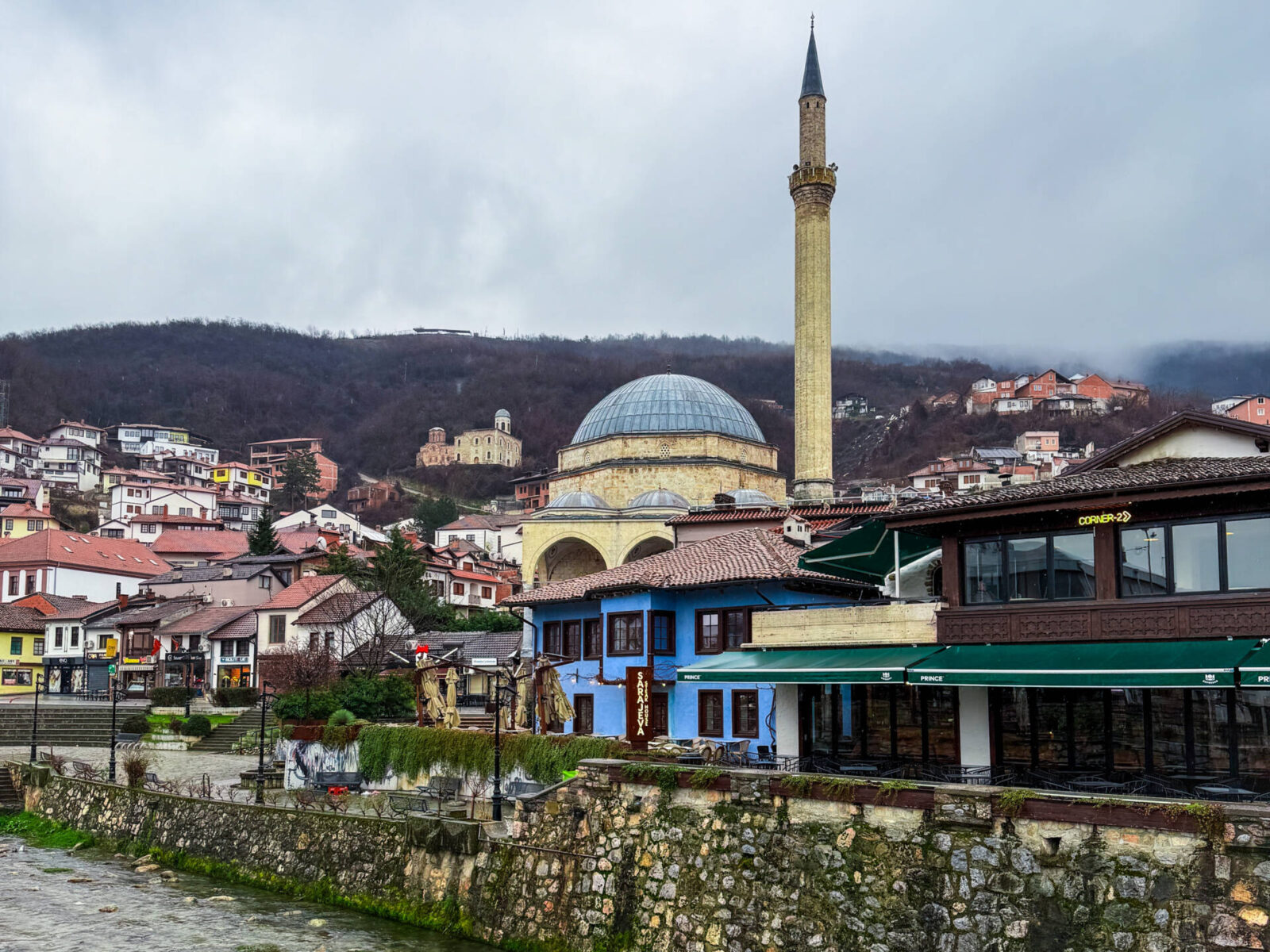
It took around 20 minutes to walk up to the top and the view from the top of the hill is definitely worth the trek. You get a full panoramic view over the city of Prizren, including the Prizren Bistrica, Sinan Pasha Mosque and the Old Stone Bridge. It was very overcast and drizzly that day, but the view was still breathtaking. I can’t imagine how beautiful it must be in the summer. In true Hayley style, I managed to make friends with a cat up there. She also followed us part of the way down the hill.
Sinan Pasha Mosque
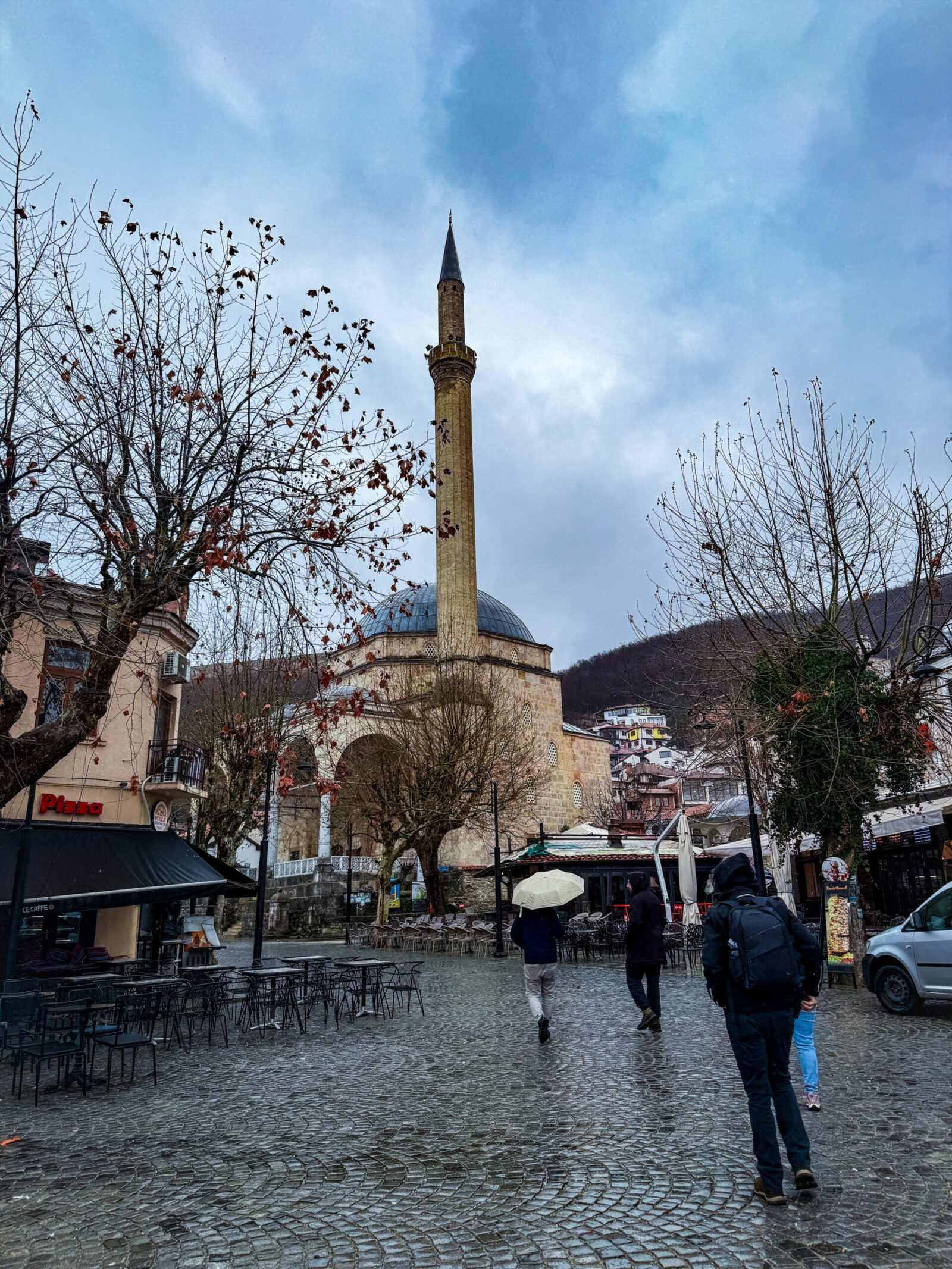
Once we’d made our way back down the hill, we headed over to the Sinan Pasha Mosque. Built in 1615 during the Ottoman era, this famous building overlooks the main street of Prizren. As well as beinga. place of worship, the Sinan Pasha Mosque welcomes tourists. To enter the building you must ensure that you remove your footwear and cover your hair, arms and legs.
Prizren Bistrica
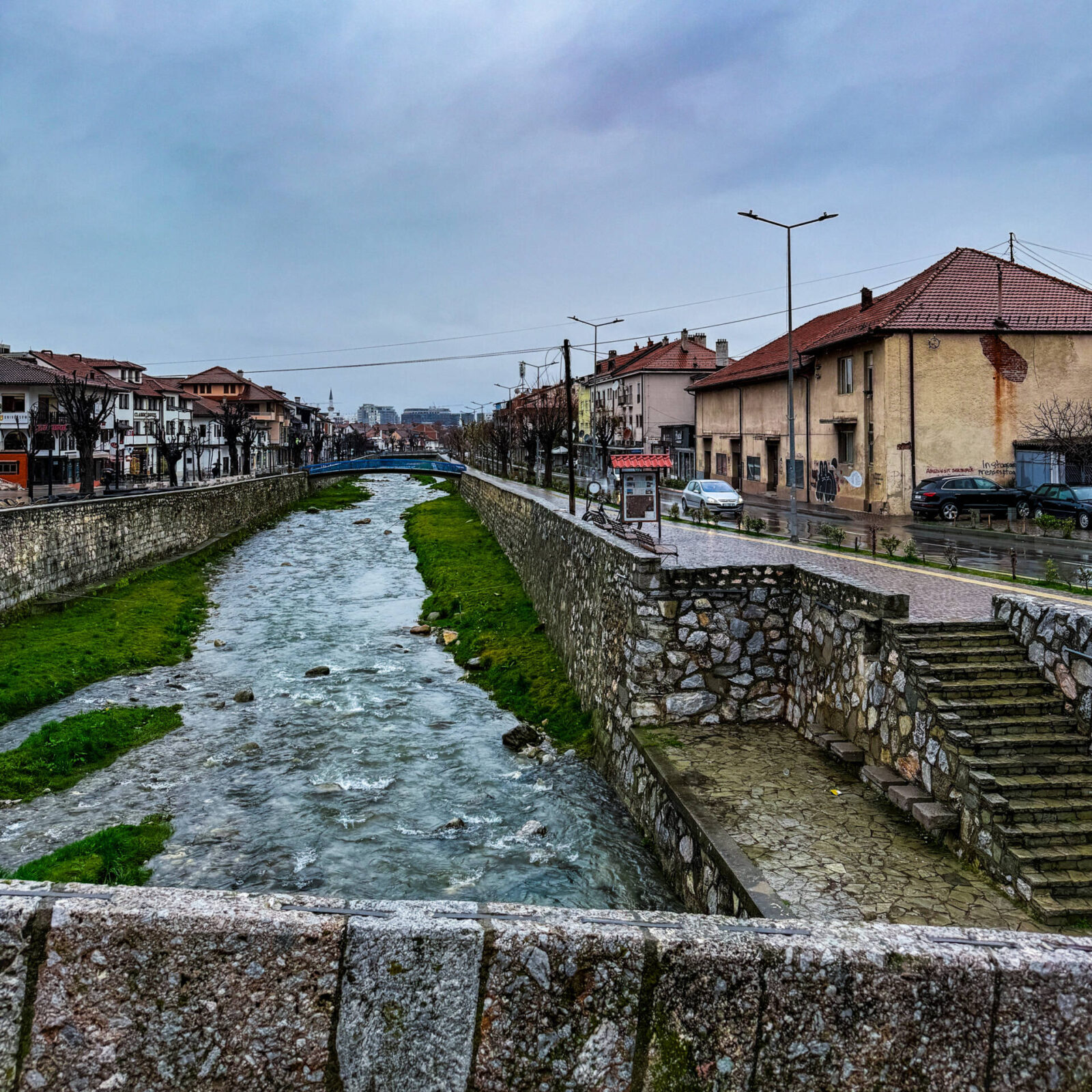
Before heading back to the car, we took a walk over the Old Stone Bridge. This 16th century bridge connects Shadërvan and Saraçhane and is listed as a cultural heritage monument. We wandered along the river, stopping to go in a sweet shop and then ended up at our final point of interest. Door 52 is a traditional door of the city of Prizren from the Ottoman Era made out of pine. It served its purpose for over 200 years until 2020, when it was removed to be destroyed. Fortunately, the door was saved by author Valtida Shukriu who is committed to the protection and promotion of cultural heritage values of Prizren. The door was restored and placed near Gani Tada Bridge as a monument to show the values of the architectural and historical cultural heritage of Prizren.
Pristina
We got back to the car and left Prizren at around 12pm and Eno began the drive to Pristina. Pristina is located in central Kosovo and is the country’s largest and capital city with a population of around 227,000. The drive between Prizren and Pristina is approximately 84km. It took us an hour and twenty minutes to reach the city centre. On our way, we drove down the famous Bill Clinton Boulevard.
Following the end of the Kosovo War in 1999, the Albanians in Kosovo wanted to thank the US president, Bill Clinton for leading the NATO intervention which ended the war. An entire boulevard was named in his honour and an 11ft statue was erected in 2009.
Palace of Youth and Sports
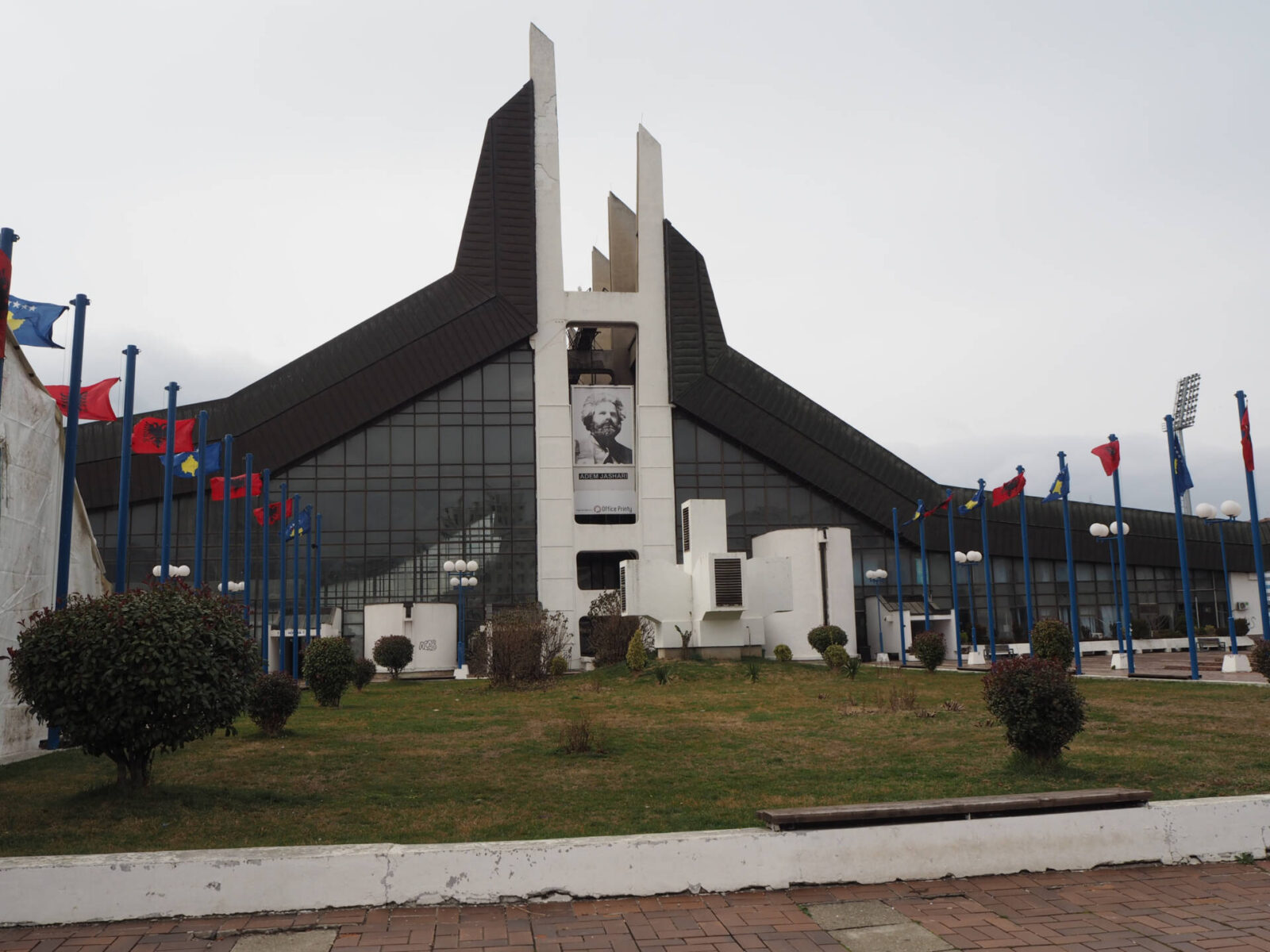
We parked up in a car park behind our first stop, which was the Palace of Youth and Sports. This unusual looking building was built in 1977 and had two indoor arenas intended for sports use. Unfortunately, the building was damaged in a fire in 2000 and although it has undergone extensive renovations in both 2014 and 2023, the larger arena and the convention hall are currently still out of use. Renovations are still taking place and the Palace of Youth and Sports is expected to be a venue for the 2030 Mediterranean Games which will be hosted in Kosovo.
On the exterior of the building, you can see a large photo of Adem Jashari, one of the founders of the Kosovo Liberation Army. He’s considered to be a national history by many Kosovar Albanians. The flags of both Albania and Kosovo also line the front of the building.
Newborn Monument
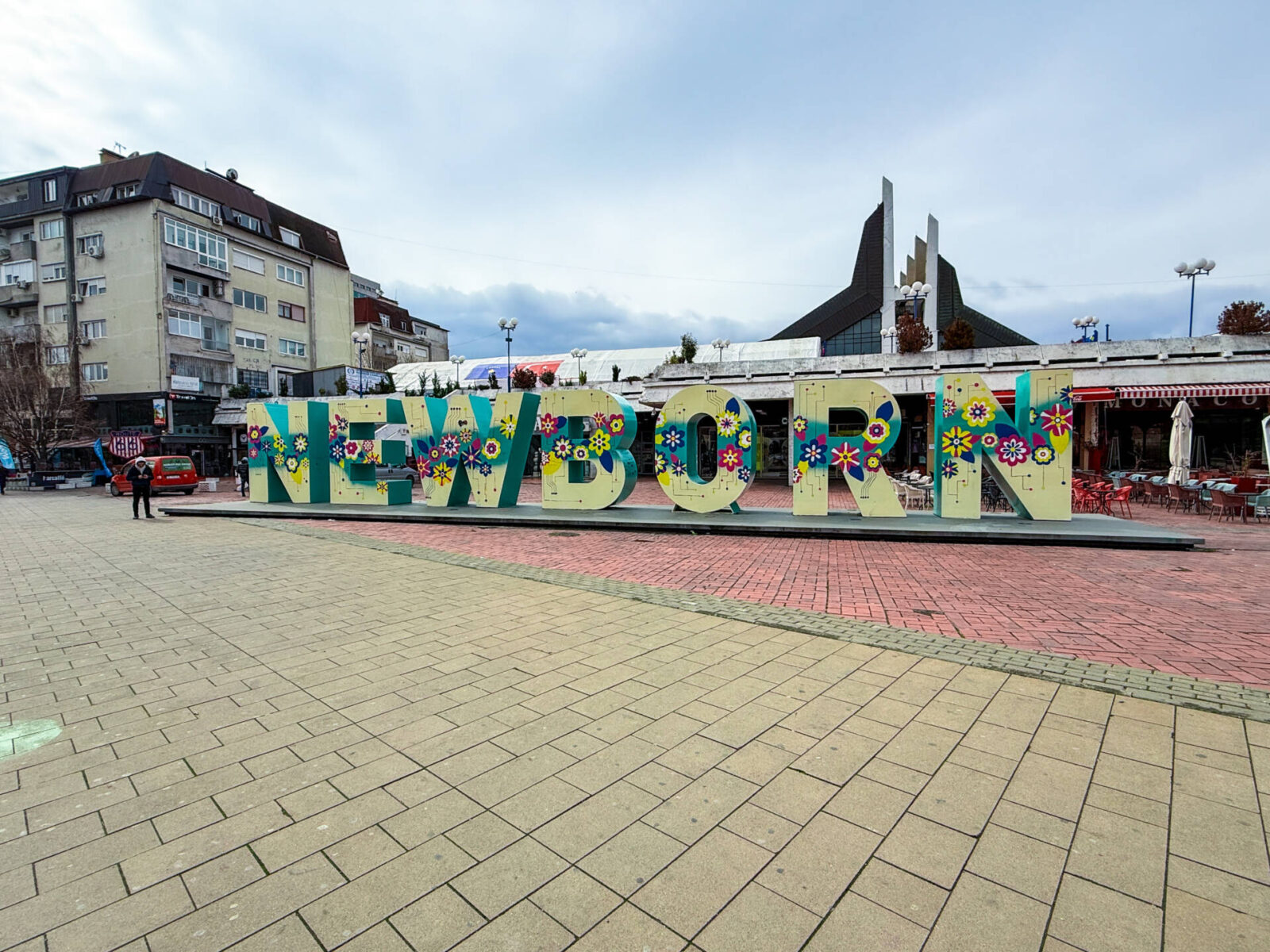
Located in front of the Palace of Youth and Sports is the Newborn Monument. Unveiled on the 17th February 2008, the day that Kosovo declared its independence from Serbia, the Newborn Monument symbolises the birth of a new nation. When the monument was first built, the letters were painted bright yellow but is repainted annually with a different theme each year. The theme for 2025 was centred around AI and the uncertain future it’s presence offers. The design combines flowers with motherboard lines to show the continuity of change as technology advances.
National Library of Kosovo
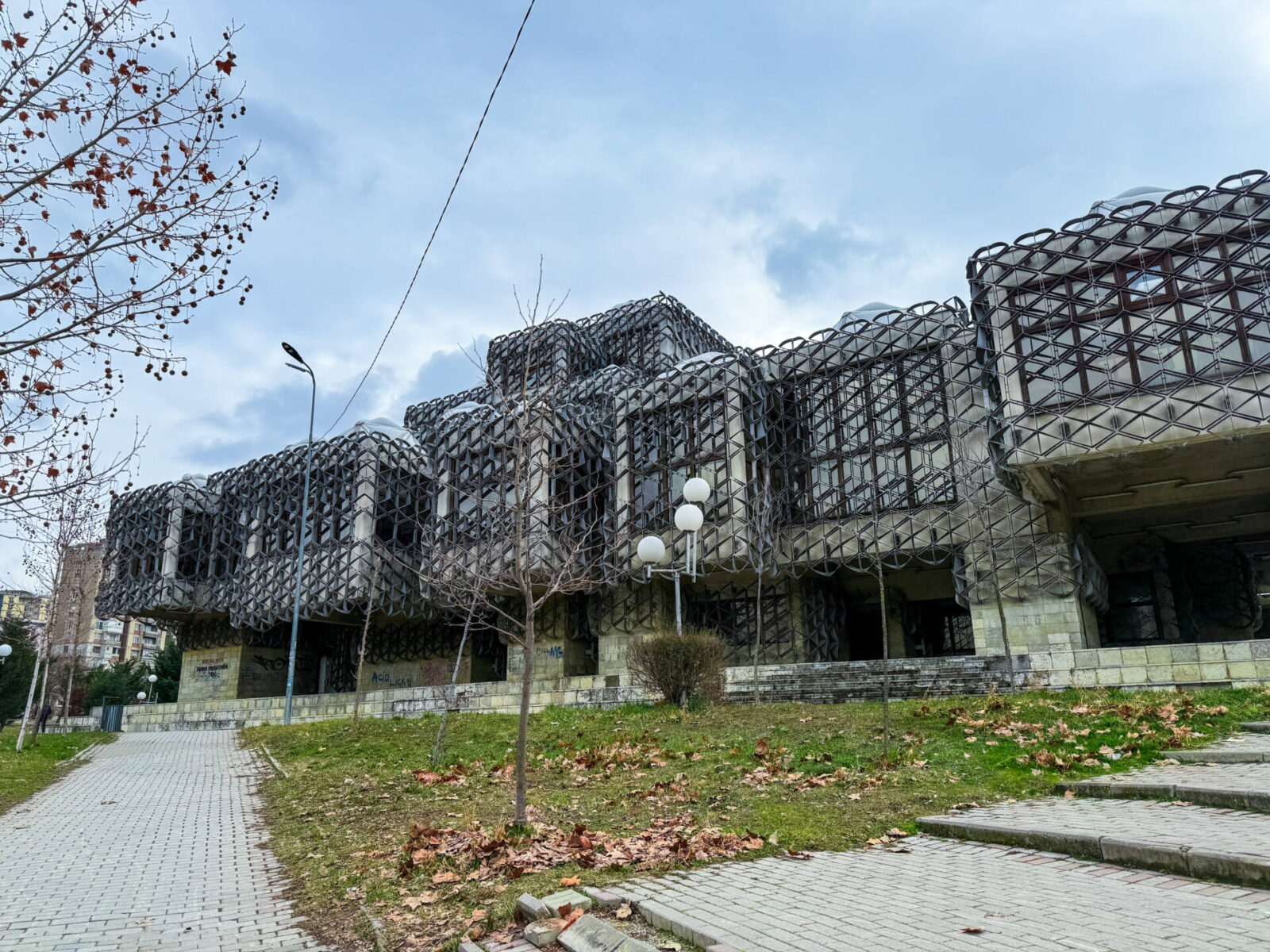
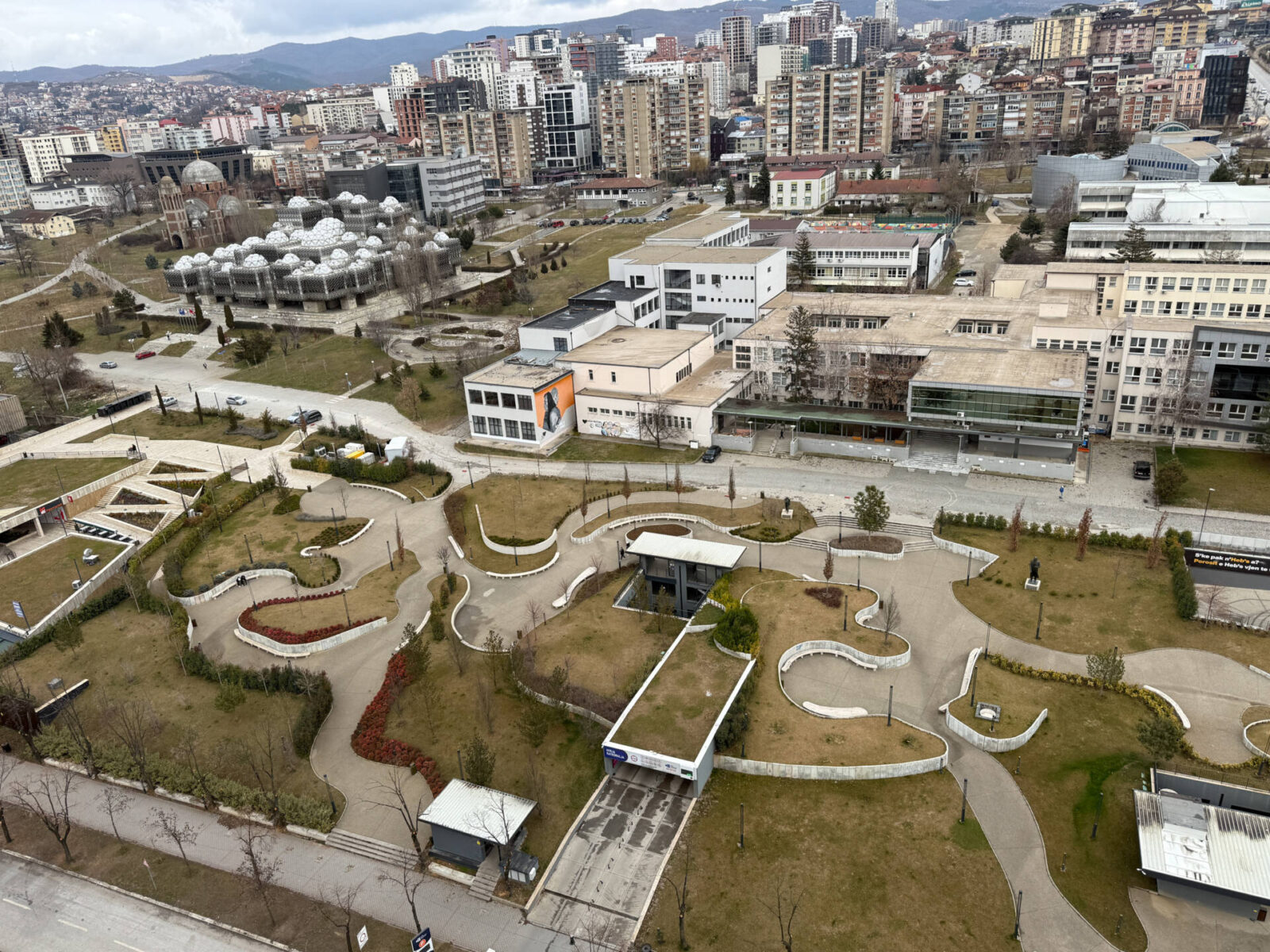
Ranked in the top ten ugliest buildings in the world, the National Library of Kosovo is a significant example of brutalist architecture. Built in 1982 and designed by Croatian architect Andrija Mutnjaković, this building has caused a lot of controversy. Despite this, it is the highest library institution in Kosovo and houses more than 2 million items with the mission to collect, preserve, promote, and make accessible written documents and the intellectual heritage of Kosovo.
Cathedral of Saint Mother Teresa
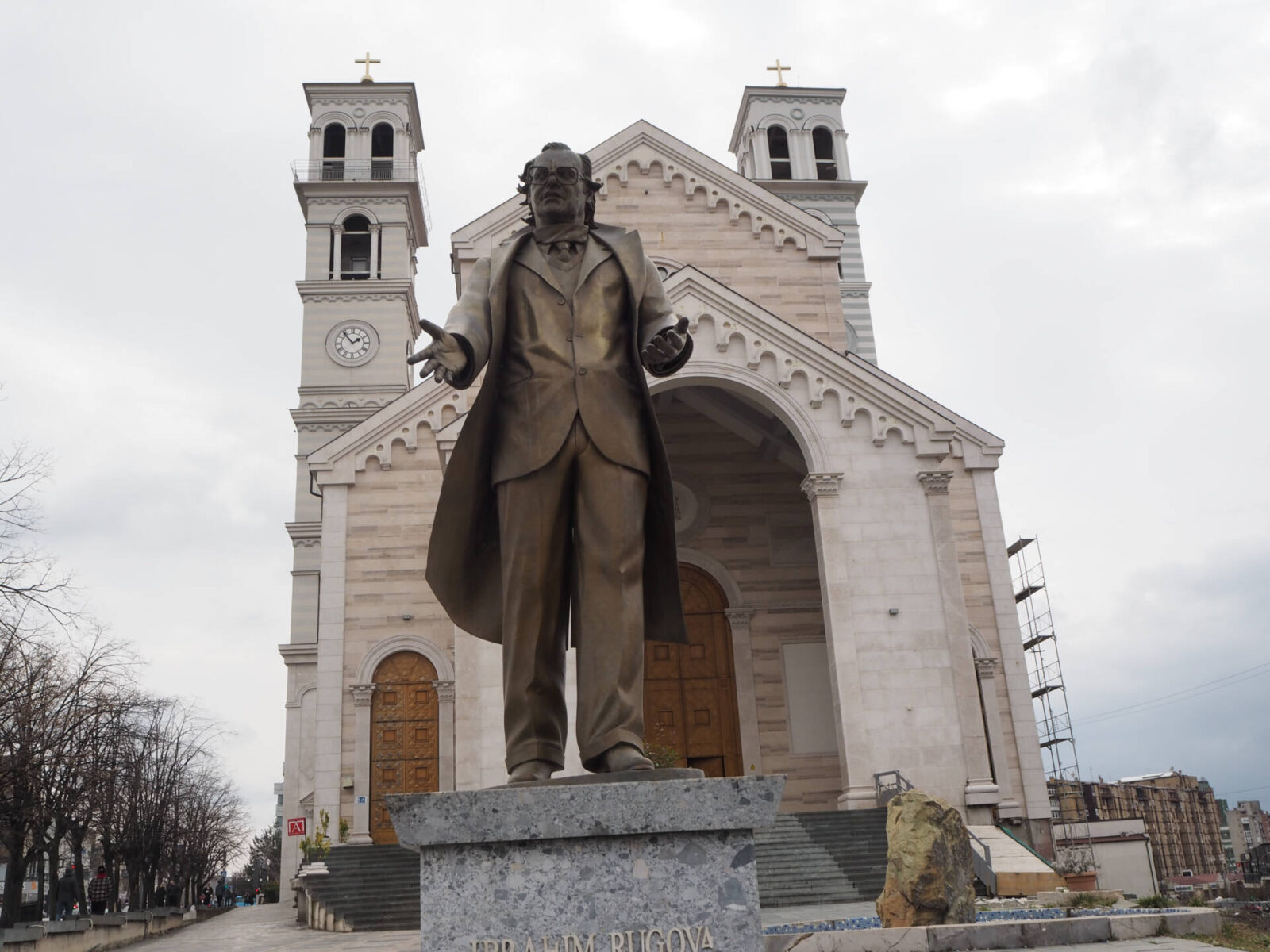
Despite the small number of Catholics in Pristina, in 2010 a Roman Catholic Cathedral was dedicated to the Albanian-Indian nun, Saint Mother Teresa on the anniversary of her death. Construction of the cathedral was completed in 2017 and it was formally consecrated on 5th September 2017, on the 20th anniversary of her death. The foundation stone was laid in 2005 by former Kosovo president Ibrahim Rugova – there is a statue honouring him outside the cathedral.
It is free to enter the cathedral and the interior is as you would expect from a modern Roman Catholic place of worship. It’s bright and airy with stained glass windows dedicated to Mother Teresa and other Catholic martyrs. On the left hand side of the cathedral, you’ll find a shrine to Mother Teresa consisting of a relic containing a drop of the saint’s blood underneath a statue of her. This was gifted to the cathedral from Calcutta. This was something that the staff of the cathedral were really excited to show us.
Cathedral Bell Tower
If you’d like to see a panoramic view of the city of Pristina, you can go up the cathedral’s bell tower. This costs just 2€ per person and there’s a lift that takes you straight to the top of the 250ft tower. The view from the top was very different to Prizren – it really helped me to appreciate the difference between the two cities. From here, we got a much better view of the National Library of Kosovo and could most of teh 99 domes that adorn the building. I always take the opportunity to see new cities from above and I believe that going up the bell tower in Pristina is something you can’t miss. Even though it was cold and extremely windy up there, it was worth it.
Shpija e Vjetër
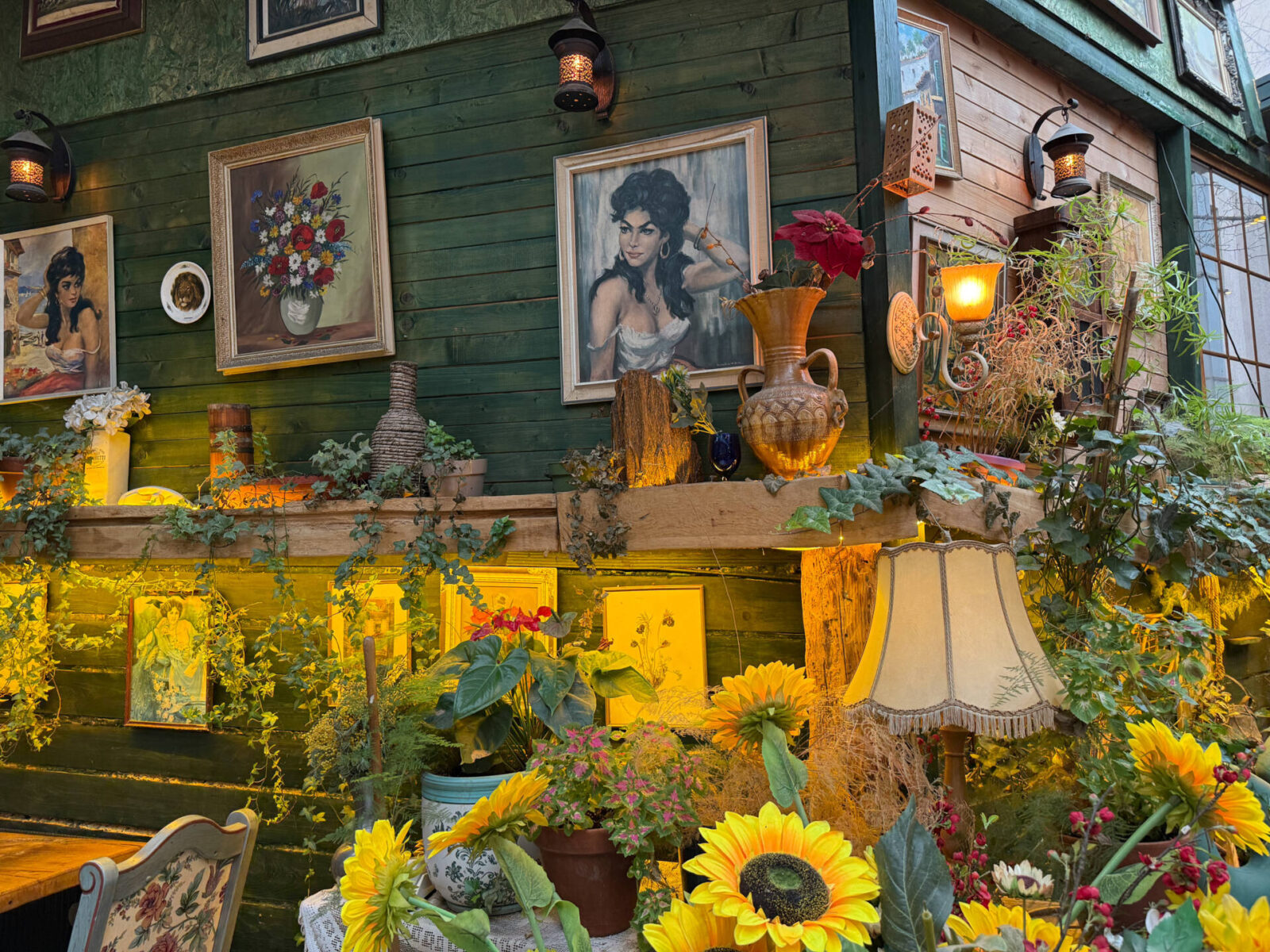
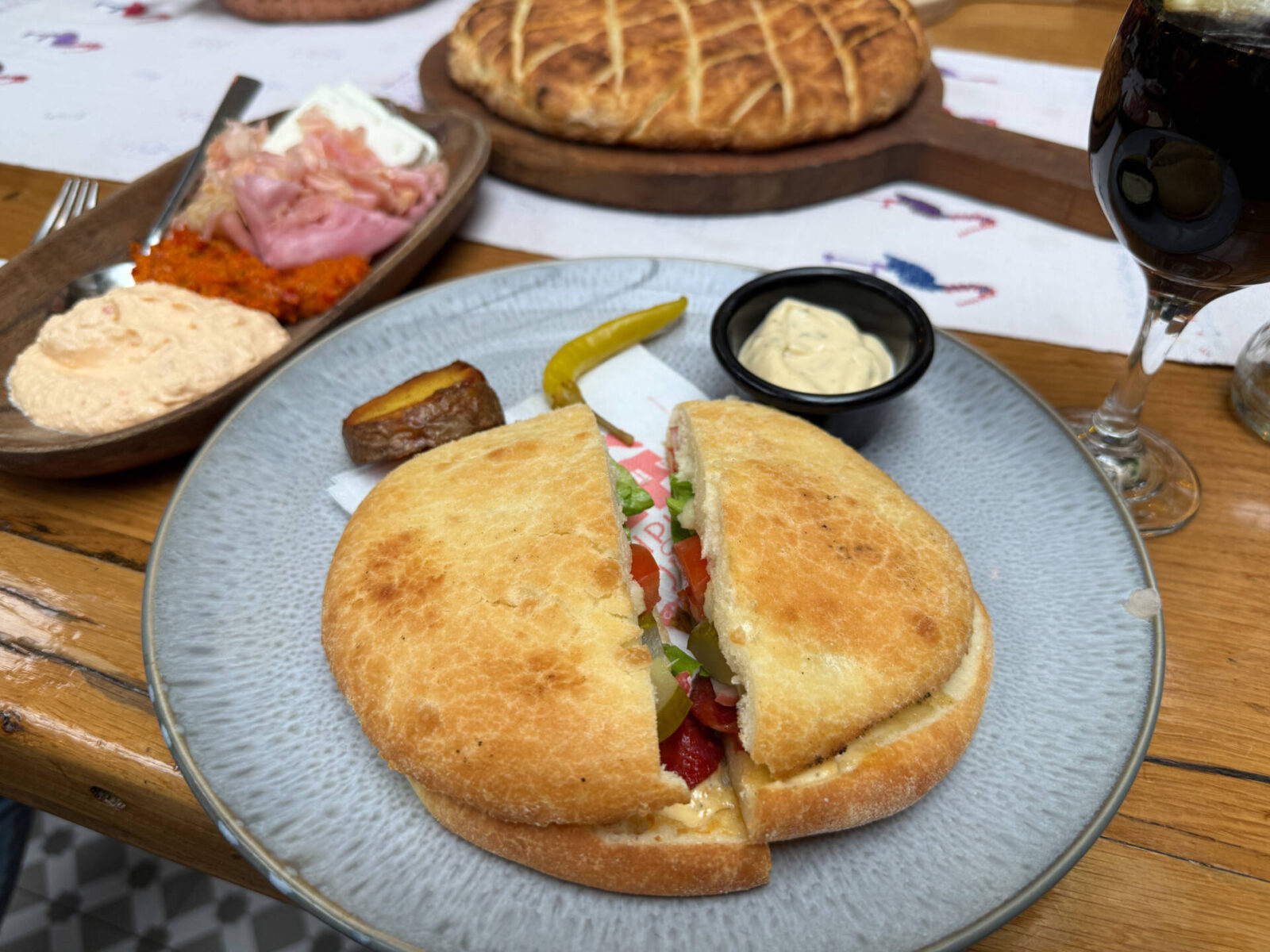
Before we could make our way back to Albania, we needed to stop for some late lunch. As it was the start of Ramadan when we visited, many cafes and restaurants were closed during the day. We managed to find a cafe called Shpija e Vjetër which open and serving food. The interior was so pretty, with a cosy and welcoming atmosphere. The menu offered a variety of Kosovar dishes for a very reasonable price. I decided to go for a sandwich with a glass of coke which came to only 5€.
Driving from Kosovo to Albania
We got back to the car and Eno started the drive back to Tirana at 16:15. We approached the same border on the way out of Kosovo and handed over our passports once again with no issues. I didn’t receive a stamp in my passport upon exiting the country either. The journey back to my hotel in Tirana took just over three hours and I was dropped off at 19:30. It was a very long day, but definitely worth it. I’m so glad that I got to see two different cities and explore a new country. If you have any spare time when you’re in Albania, I’d really recommend a trip to Kosovo.
Tips for Travelling to Kosovo
If you’re planning on visiting Kosovo, whether it’s for a day trip or longer, here are a few tips:
- Check the FCDO advice before you visit – As mentioned earlier, in parts of Kosovo there is a high threat of terrorist attacks towards British nationals. Always exercise caution and take advice from the gov.uk website before you travel. It’s best to travel as part of a tour and I highly recommend Dream Tours Albania.
- Purchase an eSIM – My mobile data plan includes inclusive data roaming in the EU, however Kosovo is not part of the EU. Whilst my network (EE) did send me a text that advised that I could purchase data in Kosovo (£15 for 24 hours!) it didn’t work. I didn’t want to be without data as I was in a foreign country with a group of strangers. So, when I was able to access wifi in the cafe in Prizren, I purchased an eSIM. The eSIM I went for was from Holafly and it cost me just £7.60 for 24 hours.
- Educate yourself on the history – As with all countries you visit, I believe that you should take some time to read up on the history of Kosovo before you visit. It’s important that you understand what happened during the Kosovo war and know about the current conflict with Serbia.
- Take Euros – If you’re visiting from Albania, you will probably have a wallet full of Albanian Lek – this will be useless in Kosovo. Make sure you take some Euros with you. Whilst most places will accept card there may be some that are cash only (such as the Bell Tower and the market stalls I purchased souvenirs from).


Leave a Comment